Calabrian Potatoes and Peppers
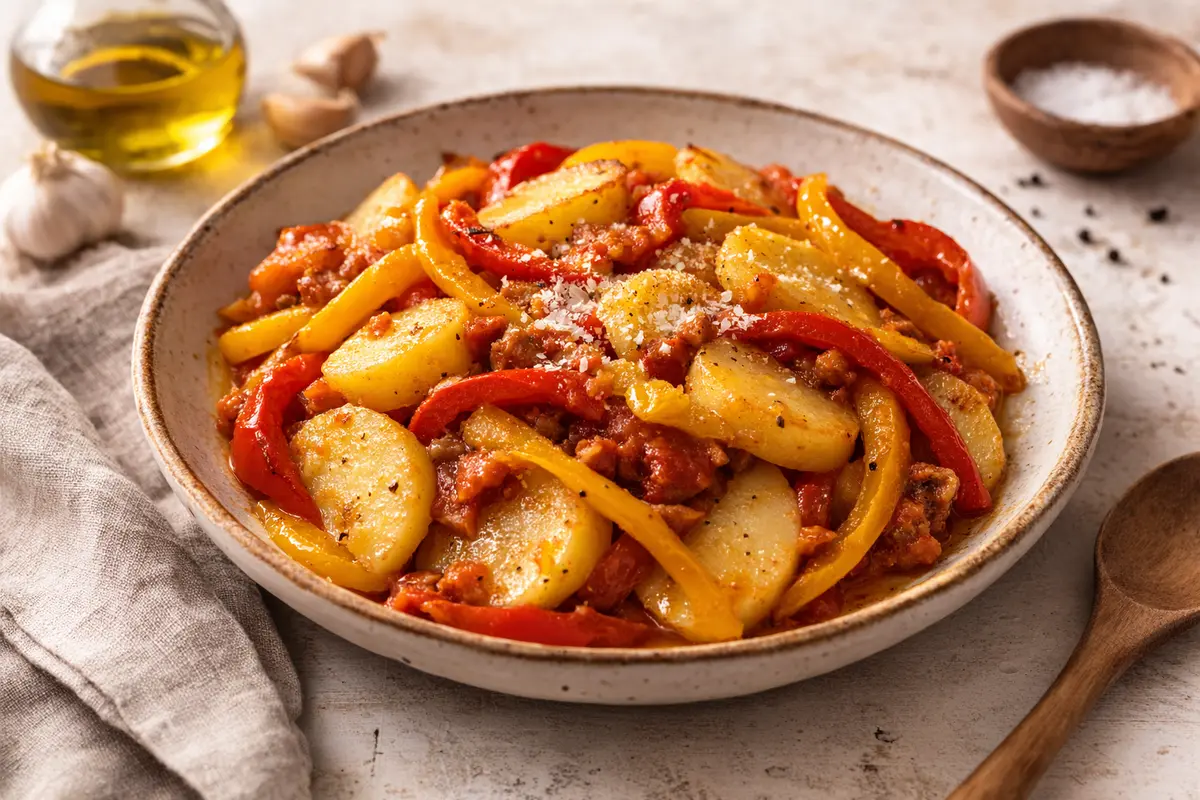
Calabrian potatoes and peppers is one of those regional dishes where a short recipe is not enough. The result depends on texture, timing and the small choices that make Italian home cooking feel generous rather than rushed. This version keeps the method practical for a modern kitchen while respecting the character of Calabria.
This dish is humble, but it should not be flat. The potatoes need to soften and take colour while the peppers collapse into the oil and season everything.
Why This Recipe Belongs to Calabria
Potatoes and peppers are common in Calabrian home cooking because they are inexpensive, filling and full of flavour when cooked slowly.
The dish can be served as a side, but with bread and cheese it becomes a simple meal. The flavour comes from patience rather than a long ingredient list.
Ingredients for Calabrian Potatoes and Peppers
- Potatoes, peeled or scrubbed and cut into chunks.
- Sweet peppers, red, yellow or mixed.
- Onion, optional.
- Garlic.
- Extra virgin olive oil.
- Dried oregano or parsley.
- Salt, black pepper and chilli, if desired.
How to Make Calabrian Potatoes and Peppers
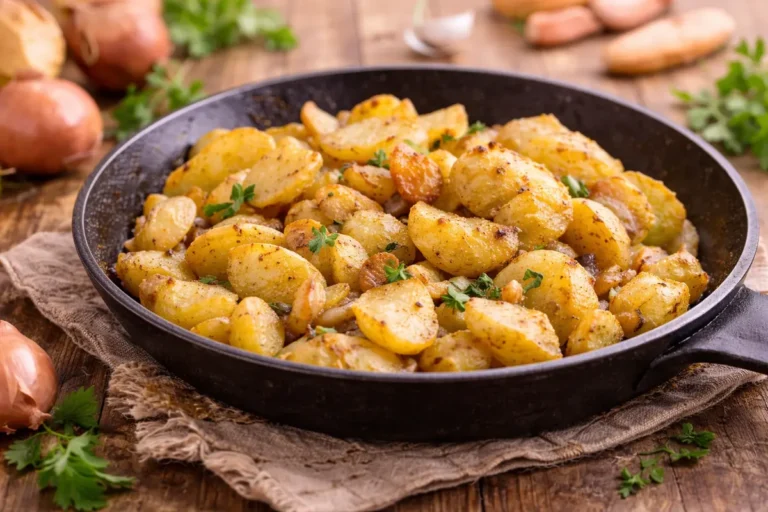
- Start potatoes first Cook the potatoes in olive oil until they begin to soften and colour.
- Add peppers Stir in sliced peppers and onion if using.
- Season Add garlic, salt, pepper and a little oregano or chilli.
- Cook gently Continue until the peppers are soft and the potatoes are tender.
- Rest briefly Let the dish stand for a few minutes so the oil and juices settle.
Cooking Notes That Make a Difference
Cut potatoes into similar sizes so they cook evenly. Large uneven pieces stay hard while smaller ones break apart.
The peppers should not be crunchy. They need time to soften and sweeten into the potatoes.
- Use a wide pan so the vegetables do not steam too much.
- Add chilli with restraint if serving as a side dish.
- A final spoon of olive oil improves the texture before serving.
Common Mistakes to Avoid
The easiest mistake with Calabrian Potatoes and Peppers is treating the recipe as only a list of ingredients. The cooking sequence matters just as much. Prepare the components before the heat is high, taste as you go, and give the main ingredient enough time to reach the texture described in the method.
It is also worth keeping the seasoning steady rather than aggressive. Regional Italian cooking often looks simple because the ingredients are familiar, but the best result comes from balance: enough salt to wake up the dish, enough fat to carry flavour, and enough resting time for the final texture to settle.
For readers cooking the dish outside Italy, ingredient substitutions should be gentle. Use the closest good-quality local option rather than chasing a perfect replacement that tastes tired or artificial. The aim is to keep the spirit of the regional recipe intact: honest ingredients, clear flavour and a final plate that makes sense at the table.
When possible, read through the full method once before starting. Many mistakes happen because the next step arrives before the pan, filling or sauce is ready.
Small adjustments are fine, but keep the main texture goal in mind from the beginning; that is what makes the recipe recognizable.
This is also the detail that helps the page feel useful to a real cook, not just written for search engines.
How to Serve It
Serve with grilled meat, sausages, fish or a simple omelette. It also works at room temperature as part of an antipasti-style table.
Bread is almost required, because the oil and pepper juices at the bottom of the dish are part of the pleasure.
If you are serving it to guests, keep the presentation simple and let the regional character of the dish do the work.
More Calabria Recipes
Continue exploring the same regional table with stuffed aubergines.