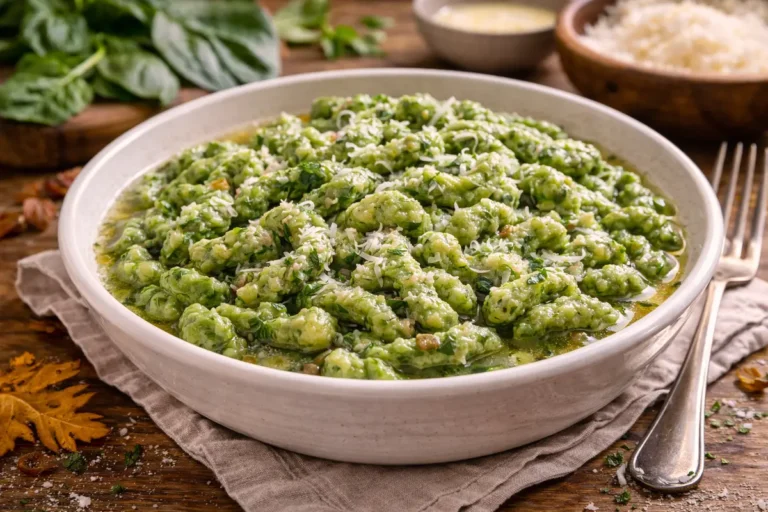
Chestnut Gnocchi with Butter and Sage
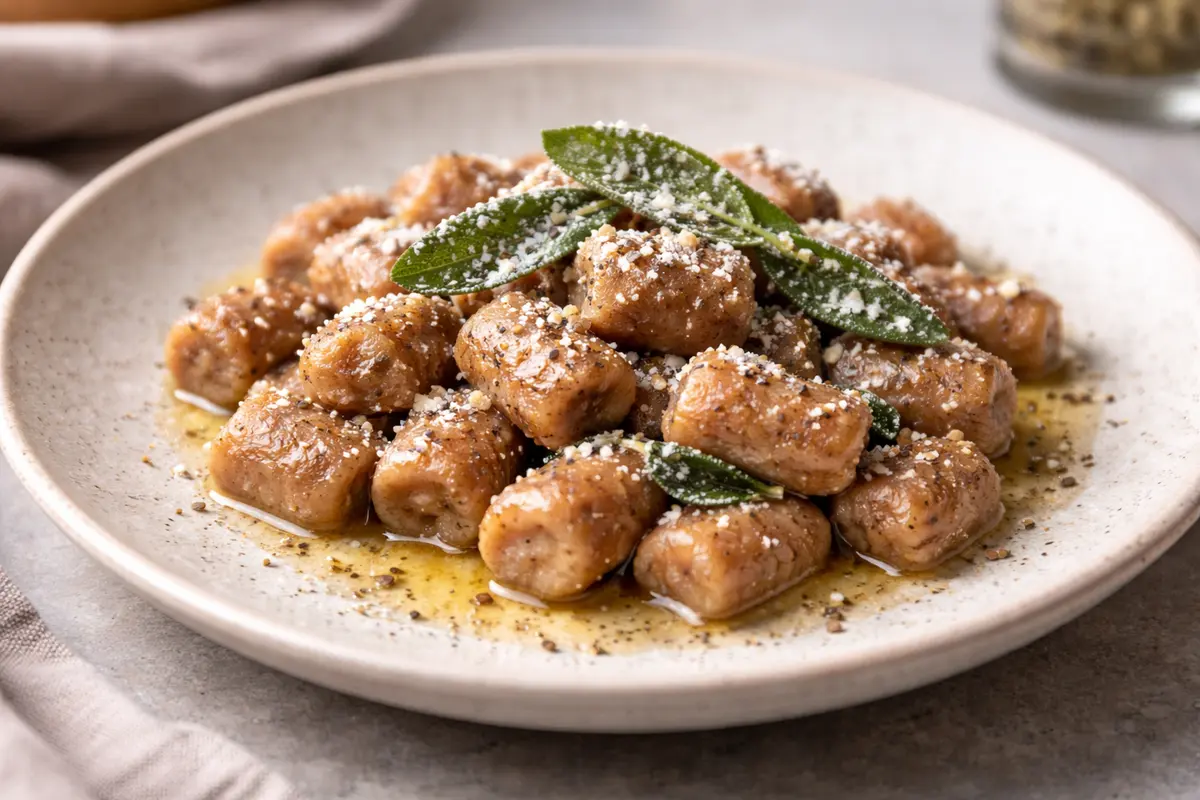
Chestnut gnocchi should taste gently nutty, not heavy or dry. Chestnut flour brings sweetness and depth, but it also changes the dough, so it needs to be balanced with potato and a little wheat flour for structure.
The best sauce is simple. Butter and sage give enough aroma without covering the flavour of the chestnut. If the gnocchi are well made, they need very little else.
Getting the Chestnut Dough Right
Use floury potatoes and let them steam dry after boiling. Too much moisture forces you to add extra flour, and that makes the gnocchi dense. Mash the potatoes while warm, then work quickly and lightly.
Chestnut flour can make the dough more fragile than plain potato gnocchi. Add it gradually with the plain flour and stop as soon as the dough holds together. It should feel soft but not sticky.
Ingredients for Chestnut Gnocchi
- 500 g floury potatoes.
- 120 g chestnut flour.
- 80 g plain flour, plus extra for shaping.
- 1 egg.
- Fine sea salt.
- 80 g butter.
- Fresh sage leaves.
- Grated cheese, optional.
Shaping Without Making Them Heavy
Roll the dough into ropes on a lightly floured surface and cut small pieces. Handle them as little as possible. If you want ridges, roll each piece gently over a fork, but do not press so hard that the centre becomes compact.
Cook the gnocchi in simmering salted water. Once they float, give them a short moment, then lift them out with a slotted spoon. Boiling too violently can break them.
Butter, Sage and the Final Toss
Melt the butter until it foams and the sage becomes fragrant. Add the gnocchi directly to the pan and coat them gently. If the butter tightens, loosen it with a spoonful of cooking water.
How to Stop Chestnut Gnocchi Falling Apart
The dough should be mixed only until it comes together. Overworking develops too much structure and makes the gnocchi heavy, while too little flour makes them fragile in the water. Cook one test gnocco first; if it breaks, fold a little more flour into the dough.
Keep the water at a lively simmer rather than a violent boil. Lift the gnocchi out instead of draining them through a colander, because they are more delicate than standard potato gnocchi.
What to Serve with Them
Butter and sage is enough for the first serving. For a richer plate, add a little grated aged cheese at the end, but avoid strong sauces that hide the chestnut flavour.
More Mountain Recipes
For more northern comfort dishes, try Polenta with Cheese and Butter, Gnocchi with Fontina Cheese Sauce and Pizzoccheri alla Valtellinese.