Pork Cheeks and Pecorino Pasta
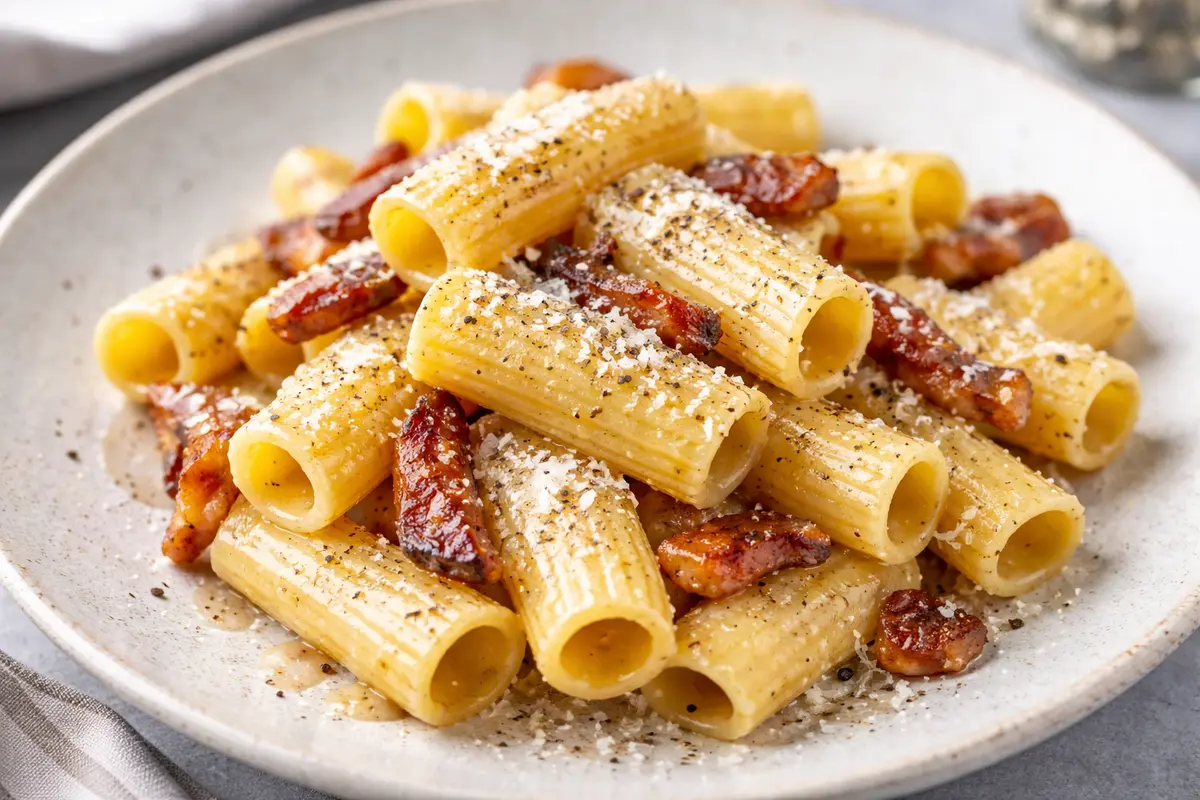
Pork cheeks and pecorino pasta depends on two things: slowly rendered guanciale and a cheese sauce made with control. If the pan is too hot when the Pecorino goes in, the cheese can clump instead of turning creamy.
This is a rich pasta, but it should not feel greasy. The rendered fat seasons the pasta, the starchy water carries the cheese, and black pepper cuts through the richness.
Render the Guanciale Slowly
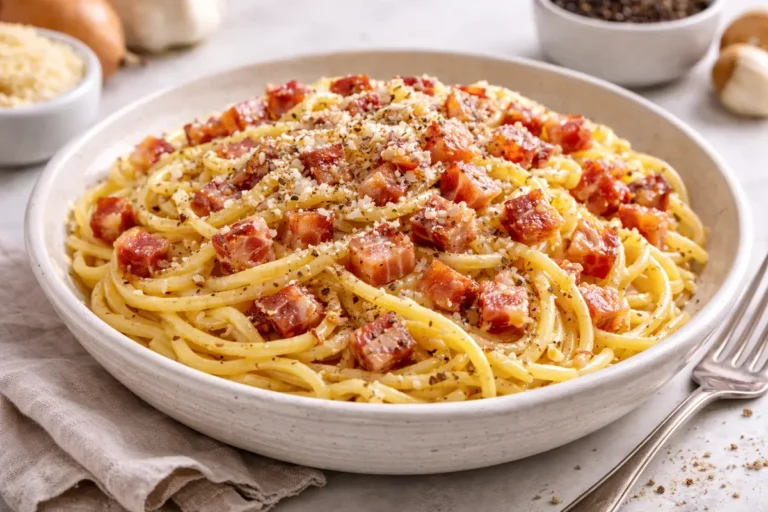
Cut the guanciale into strips or small batons and start it in a cool pan. Let the fat render gradually over medium-low heat. The pieces should become golden at the edges and crisp enough to give texture.
Do not rush this part. If the outside burns before the fat melts, the sauce will taste harsh and oily. Once crisp, keep the guanciale and its fat in the pan while the pasta cooks.
Ingredients for Guanciale and Pecorino Pasta
- 360 g pasta, such as rigatoni, tonnarelli or spaghetti.
- 150 g guanciale, cut into strips.
- 90 g Pecorino Romano, finely grated.
- Black pepper, freshly ground.
- Fine sea salt for the pasta water.
- Pasta cooking water to emulsify the sauce.
Make the Cheese Sauce Off the Heat
Grate the Pecorino finely and mix it with a little warm pasta water until it forms a thick paste. Drain the pasta slightly underdone and toss it with the guanciale and fat. Add more pasta water so the pan looks glossy.
Take the pan off direct heat before adding the Pecorino paste. Toss quickly, adding small splashes of water until the sauce coats the pasta. If it tightens, loosen it gently rather than returning it to fierce heat.
Serve While the Sauce Is Moving
This pasta waits for no one. Serve as soon as the sauce is creamy and the guanciale is still crisp. Finish with black pepper and a little extra Pecorino if needed.
Why the Sauce Can Split
Pecorino sauces split when the cheese meets too much heat or too little water. The safest method is to create a thick cheese paste first, then loosen it with starchy pasta water while tossing off the heat.
If the sauce looks grainy, add a spoonful of hot pasta water and keep moving the pasta. Do not put the pan back over high heat. The residual warmth of the pasta and guanciale is usually enough.
Choosing the Pasta Shape
Rigatoni catches pieces of guanciale and works well with a glossy sauce. Spaghetti or tonnarelli give a more Roman feel and need quick tossing so the cheese coats every strand.
More Lazio Pasta Recipes
For more Roman pasta, try Spaghetti Carbonara, Cacio e Pepe and Spaghetti all’Amatriciana.