Seafood Carbonara – Viareggio Style Tuscan Pasta Recipe
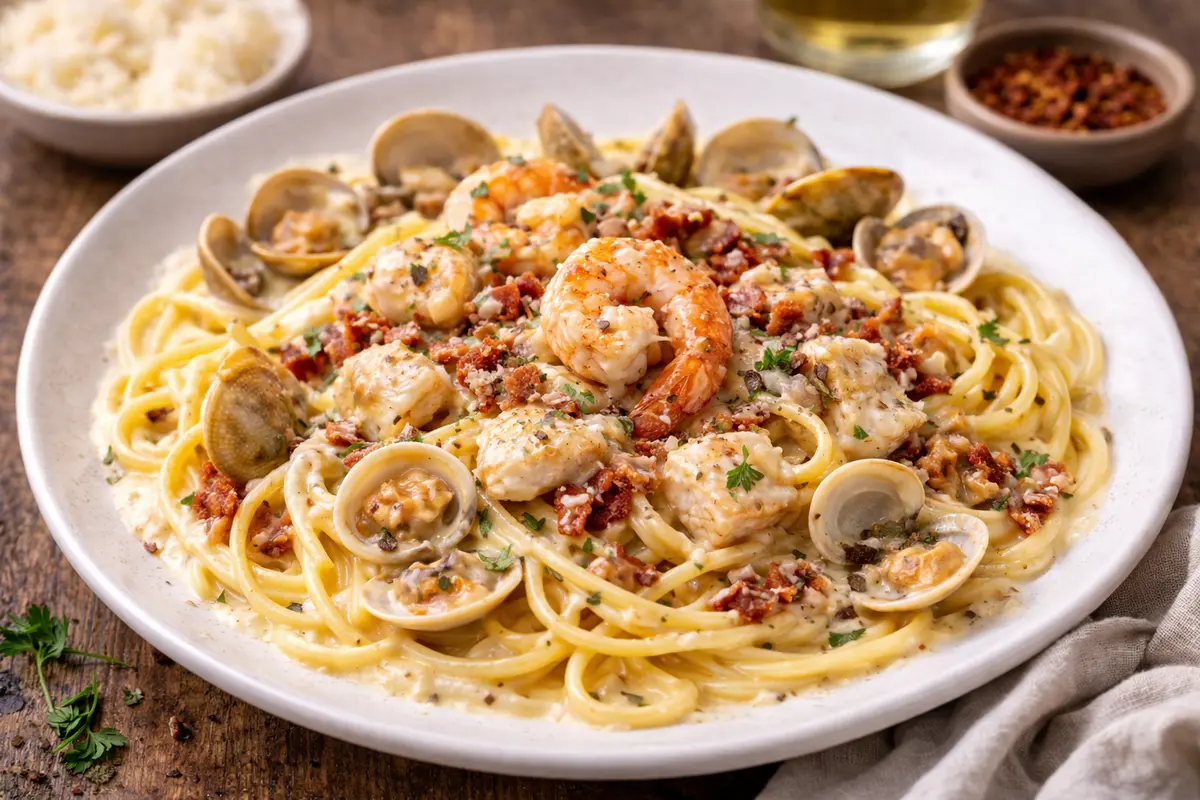
Seafood carbonara, often called carbonara di mare, takes the creamy egg-and-pepper idea of carbonara and moves it toward the Tuscan coast. This version is inspired by the seafood cooking around Viareggio: quick-cooked seafood, hot pasta, egg yolks and enough pasta water to make the sauce glossy without adding cream.
The important point is heat control. Seafood can turn tough if cooked too long, while eggs can scramble if added over direct heat. The recipe works when both are treated gently and brought together at the end.
How Seafood Carbonara Is Different from Classic Carbonara
Classic carbonara depends on guanciale, egg, Pecorino and black pepper. A seafood version cannot simply replace the meat and keep everything else the same. The seafood releases juices, cooks faster and has a cleaner flavour, so the sauce needs to be lighter and more careful.
Use the egg mixture for creaminess, not cream. The sauce should cling to the pasta in a thin, silky layer. If it looks like scrambled egg, the pan was too hot. If it looks watery, it needs a little more tossing and less pasta water.
Ingredients for Seafood Carbonara
- 360 g spaghetti or linguine – long pasta works best because it catches the sauce.
- 250 g mixed seafood – mussels, squid or small pieces of firm fish can work if cleaned well.
- 150 g prawns or scampi tails – add sweetness and a coastal flavour.
- 3 egg yolks and 1 whole egg – the base of the creamy sauce.
- 40 g grated Pecorino or Parmigiano – use a modest amount so it does not overpower the seafood.
- 1 garlic clove – used to perfume the oil, not dominate the dish.
- Black pepper, salt and olive oil – simple seasoning matters here.
Cook the Seafood Quickly First
Warm olive oil with a lightly crushed garlic clove, then add the seafood. Cook only until it firms up and releases some juices. Remove the garlic if it begins to colour too much. The seafood should smell sweet and briny, not fried hard.
Once cooked, take the pan off the heat while the pasta finishes. This pause protects the seafood from overcooking and gives you more control when the egg mixture goes in.
Make the Egg Sauce Without Scrambling It
Whisk the egg yolks, whole egg, grated cheese and plenty of black pepper in a bowl. Cook the pasta until al dente and reserve a cup of pasta water before draining.
Move the pasta into the seafood pan off the heat. Toss well, then add the egg mixture gradually. Add a spoonful of pasta water and keep tossing until the sauce turns glossy. The residual heat from the pasta is enough; direct heat is the main risk.
What the Sauce Should Feel Like
A good seafood carbonara recipe should feel silky and light, not heavy. The sauce should coat the pasta, the seafood should stay tender and the black pepper should give warmth without hiding the sea flavour.
More Seafood and Tuscan Recipes
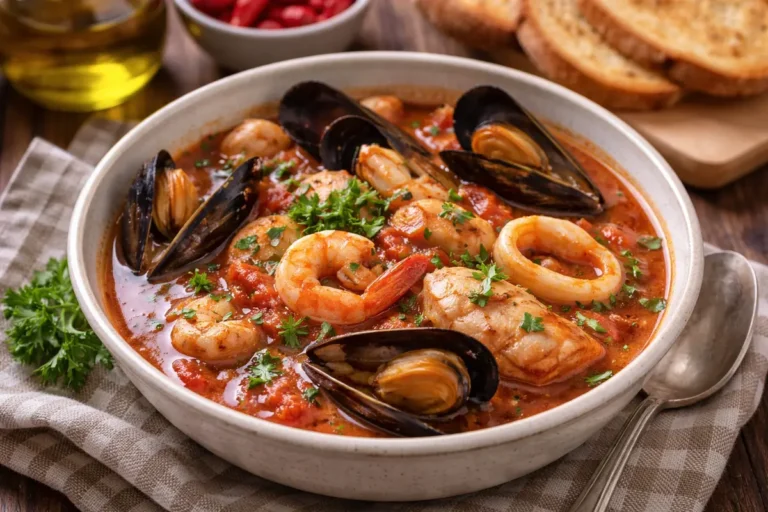
For another coastal Tuscan dish, read Cacciucco. You may also like Spaghetti alle Vongole and Scampi alla Busara.