Arancini di Riso: Sicilian Rice Balls with Ragu
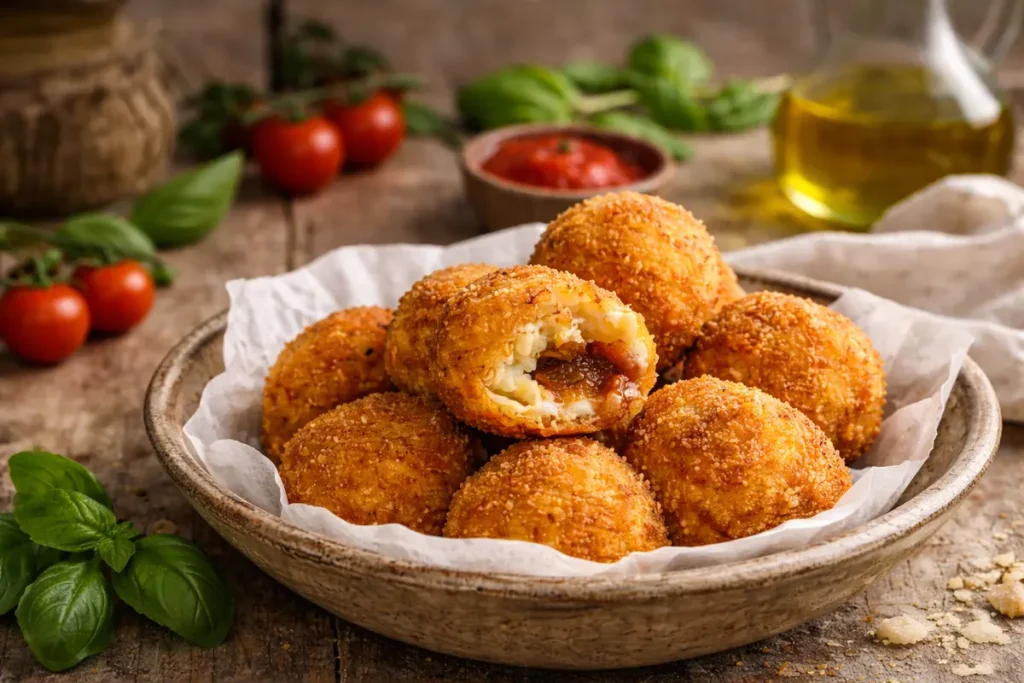
Sicilian arancini rice balls deserves more than a short note because the result depends on timing, texture and the small details that make regional Italian cooking feel trustworthy. This version keeps the method clear for a home kitchen while respecting the character of Sicily.
Arancini should have a crisp shell, seasoned rice and a filling that stays centred. The rice needs to be sticky enough to shape but not mushy.
Why This Recipe Belongs to Sicily
Arancini are one of Sicily’s most recognisable street foods, with variations across the island.
The classic idea is simple and clever: cooked rice wrapped around a savoury filling, breaded and fried until golden.
Ingredients for Arancini di Riso
- Risotto rice.
- Saffron or tomato, for seasoning the rice.
- Ragu.
- Peas, optional.
- Mozzarella or caciocavallo.
- Breadcrumbs.
- Oil for frying.
How to Make Arancini di Riso
- Cook rice Prepare seasoned rice and cool it fully.
- Prepare filling Use a thick ragu so it does not leak.
- Shape Flatten rice in your hand, add filling and close.
- Bread Coat with batter or egg and breadcrumbs.
- Fry Cook until crisp and deeply golden.
Cooking Notes That Make a Difference
Cold rice shapes much better than warm rice.
The filling must be thick; watery ragu weakens the shell.
- Wet hands lightly when shaping.
- Keep arancini compact.
- Fry in batches.
Common Mistakes to Avoid
The easiest mistake with Arancini di Riso is following the ingredient list but ignoring the texture goal. Read the method once before starting, keep the heat under control and taste as you go.
Seasoning should feel balanced rather than aggressive. Most regional Italian dishes work because simple ingredients are handled carefully, not because the plate is overloaded.
If an ingredient is hard to find outside Italy, choose the closest good-quality local option and protect the spirit of the recipe: clear flavour, honest texture and a final dish that makes sense at the table.
Before serving, check the final texture rather than only the clock. If the dish needs another minute to thicken, soften, crisp or rest, that small pause usually improves the result.
For readers cooking outside the region, the most useful approach is to understand the role of each ingredient. Some ingredients bring sweetness, some bring salt, some bring body, and some bring aroma. Once that role is clear, small substitutions become much safer.
It also helps to prepare the recipe once without rushing. After the first attempt, you can adjust the seasoning, portion size and timing to match your kitchen while keeping the dish recognisably Italian.
Make-Ahead and Storage
If you need to prepare ahead, keep the finished dish covered and reheat gently only when the texture allows it. Fried or crisp dishes are best finished close to serving, while braised, baked or sauced dishes usually tolerate a short rest better.
Store leftovers in the fridge once cool and use them within a reasonable time. Reheat with a little water, oil, broth or gentle oven heat depending on the recipe, always aiming to restore the original texture rather than simply making it hot.
When reheating or serving later, avoid masking the dish with extra sauce or seasoning. Small corrections are useful, but the original regional character should still be easy to recognise.
For a stronger result, write down what worked in your own kitchen. Regional recipes become easier and more reliable when the cook learns the exact heat, pan and resting time that suit their equipment.
How to Serve It
Serve hot as street food, starter or party dish.
They are filling, so one or two can be enough with salad.
If you are serving it to guests, keep the presentation simple and let the regional character of the dish do the work.
More Sicily Recipes
Continue exploring the same regional table with Sicilian aubergine caponata.