Italian Breadsticks
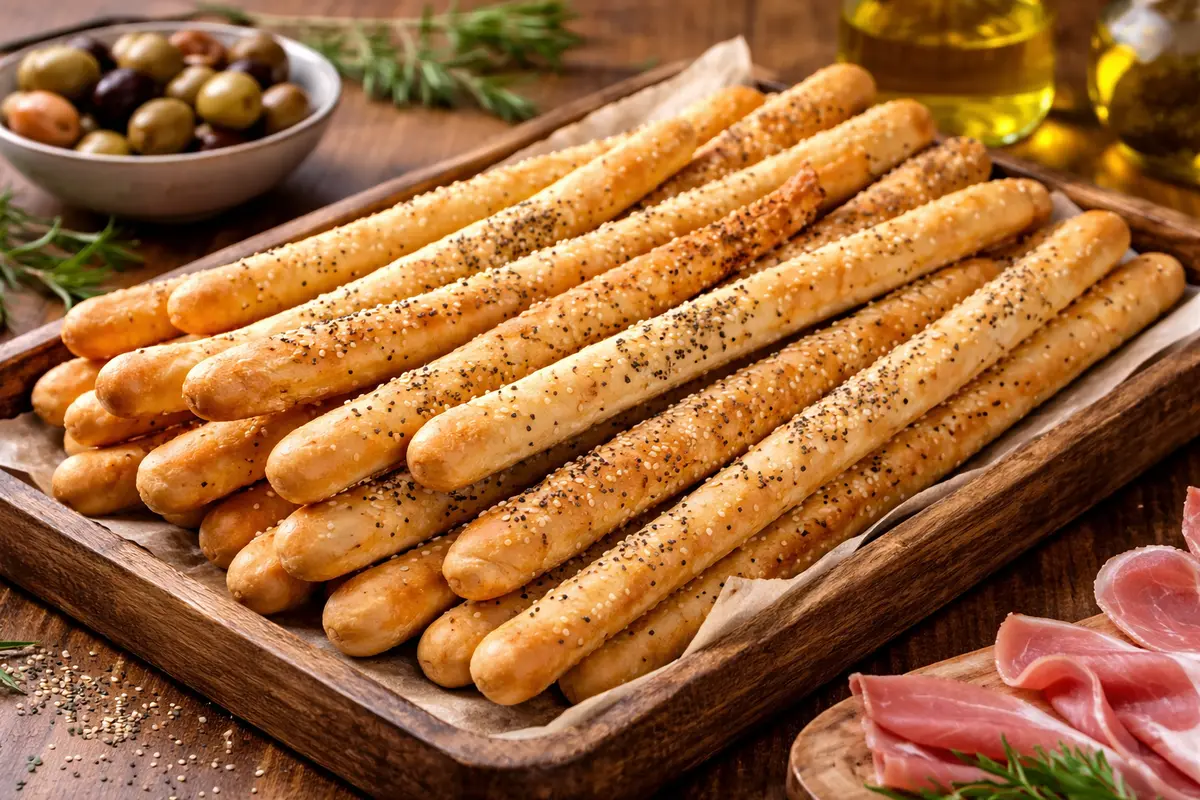
Grissini are thin, crispy Italian breadsticks that originated in the region of Piedmont, particularly in the city of Turin. Light, crunchy and incredibly versatile, they are traditionally served as an appetiser alongside cured meats, cheeses or olives. These homemade grissini are simple to prepare and require only a few basic ingredients, making them a perfect addition to any Italian table.
Ingredients ( Serves: 6 )
300 g all-purpose flour
180 ml warm water
2 tbsp extra virgin olive oil
5 g dry yeast
1 tsp salt
1 tsp sugar
Optional toppings:
sesame seeds
poppy seeds
dried oregano
coarse sea salt
Method
1. Prepare the dough
In a bowl dissolve the yeast and sugar in the warm water and let it sit for about 5 minutes until slightly foamy.
2. Mix the ingredients
Add the flour, olive oil and salt. Mix until a soft dough forms.
3. Knead
Transfer the dough to a floured surface and knead for 8–10 minutes until smooth and elastic.
4. First rise
Place the dough in a lightly oiled bowl, cover with a cloth and let it rise for about 1 hour, or until doubled in size.
5. Shape the grissini
Roll the dough into a rectangle about 1 cm thick. Cut thin strips and gently roll each strip into long breadsticks.
6. Add toppings
Place the breadsticks on a baking tray lined with parchment paper and sprinkle with sesame seeds, salt or herbs if desired.
7. Bake
Bake in a preheated oven at 200°C (390°F) for about 15–18 minutes, until golden and crisp.
8. Cool
Allow the grissini to cool completely before serving so they become perfectly crunchy.
Tips and Variations
For extra flavour you can brush the dough lightly with olive oil before baking and sprinkle with herbs such as rosemary or oregano. If you prefer thinner and crispier breadsticks, stretch the dough strips a little longer before baking. Grissini also store well in an airtight container for several days, making them a great snack or accompaniment to antipasti.
History of Italian breadsticks
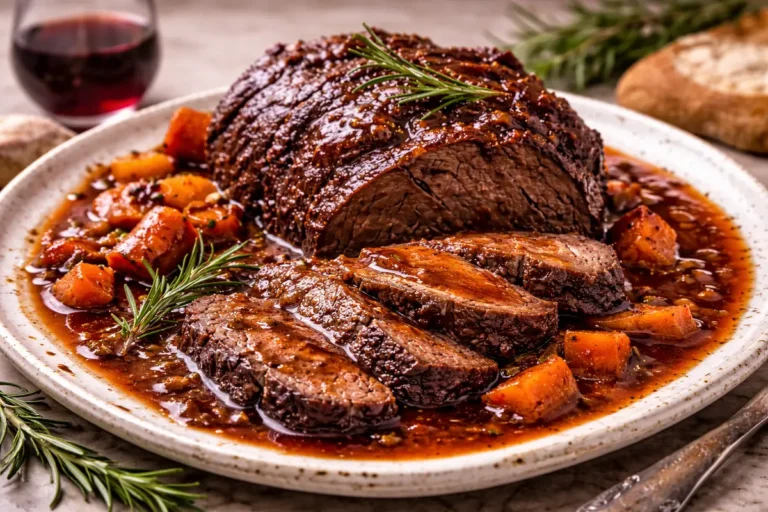
Grissini date back to the 17th century in Turin, where they were originally created for the young Duke of Savoy who needed a lighter bread that was easier to digest. Over time they became a staple of Italian cuisine and are now served throughout the country as part of an antipasto platter. Their simplicity reflects the Italian philosophy of turning basic ingredients into something delicious, a tradition also found in many classic Piedmontese recipes such as Agnolotti and the famous slow-cooked Brasato al Barolo, both showcasing the rich culinary heritage of northern Italy.