Tortellini in Brodo: Traditional Italian Filled Pasta
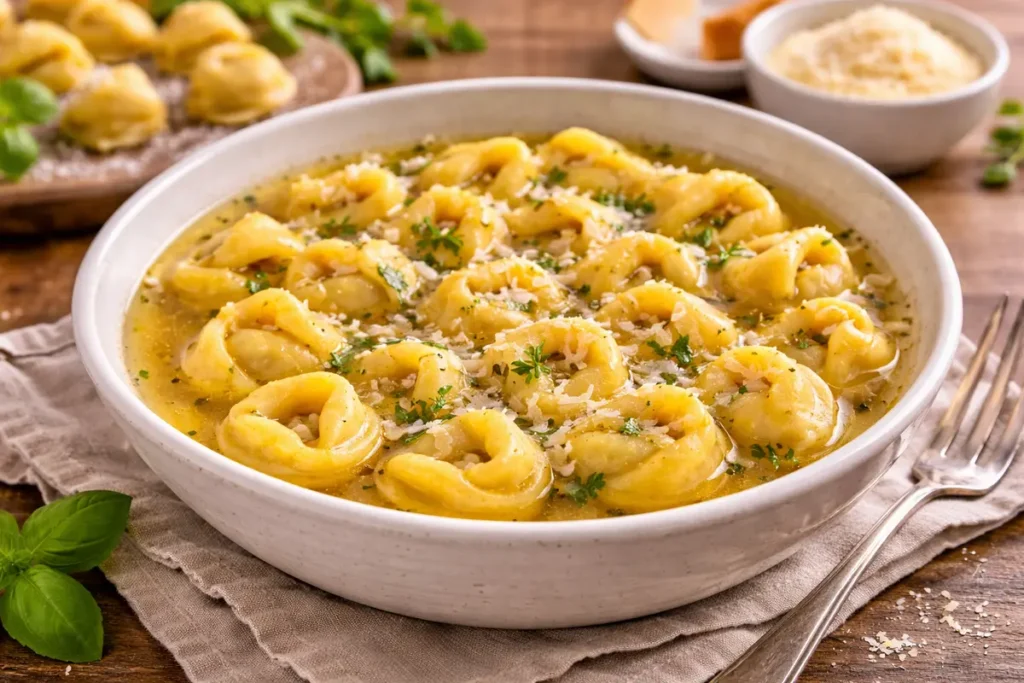
Tortellini in brodo are one of Emilia-Romagna’s most important filled pasta dishes: tiny parcels of egg pasta wrapped around a rich meat, mortadella, prosciutto and Parmigiano-Reggiano filling, then cooked and served in clear meat broth.
The dish is strongly associated with the area between Bologna and Modena. The two cities have long shared, debated and protected the tradition, while Castelfranco Emilia often appears in the origin story. What matters in the kitchen is precision: thin pasta, a compact filling, careful folding and broth good enough to carry the whole bowl.
Why the Filling Matters
A good tortellini filling should taste savoury, rounded and concentrated. Pork loin, prosciutto crudo, mortadella, Parmigiano-Reggiano and nutmeg give the classic Emilian flavour. The mixture should be minced finely and rested before shaping, so it firms up and becomes easier to portion into tiny pasta squares.
Do not overfill each square. Tortellini are small by design. Too much filling makes them burst in the broth and hides the delicate shape.
Ingredients for Tortellini in Brodo
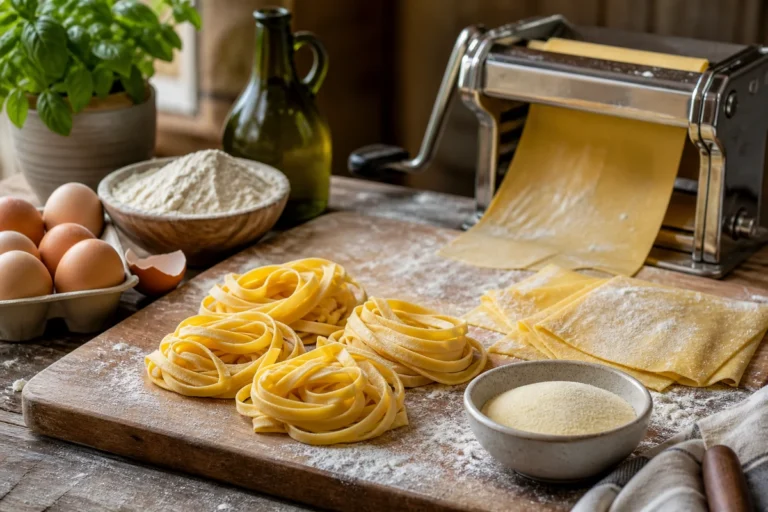
For the pasta dough
- 300 g 00 flour – plus extra for dusting.
- 3 large eggs – enough to make a smooth, elastic egg pasta dough.
- A pinch of salt – optional, but useful for balance.
For the filling
- 150 g pork loin – browned gently, then finely minced.
- 100 g prosciutto crudo – finely chopped.
- 100 g mortadella – gives softness and aroma.
- 120 g Parmigiano-Reggiano – finely grated.
- 1 egg – to bind the filling.
- Freshly grated nutmeg – use a little; it should perfume, not dominate.
- Fine sea salt – only if needed, because the cured meats and cheese are already salty.
For serving
- Good meat broth – traditionally rich and clear, often made with beef and capon or chicken.
- Parmigiano-Reggiano – optional at the table.
Rolling and Folding Tortellini
Roll the pasta thinly and work in small batches so it does not dry out. Cut the sheet into small squares, add a little filling, fold into a triangle, press out trapped air and wrap the two corners around your fingertip. The finished tortellino should look compact, with a small ring shape and sealed edges.
If the pasta dries before folding, it will crack. Keep unused sheets covered and shape only as many squares as you can fill quickly.
Method
- Make the pasta dough.
Mix flour and eggs until a firm dough forms. Knead until smooth, wrap and rest for at least 30 minutes. - Prepare the filling.
Brown the pork loin gently, then mince it finely with prosciutto and mortadella. Mix with Parmigiano-Reggiano, egg and nutmeg. - Rest the filling.
Chill the filling so it firms up and the flavours settle. This makes shaping easier. - Roll the pasta.
Roll the dough into thin sheets, keeping them covered so they stay flexible. - Cut and fill.
Cut small squares, place a small amount of filling in the centre and fold each square into a triangle. - Shape the tortellini.
Wrap the corners around your fingertip and press to seal, making the classic little ring shape. - Cook in broth.
Bring the broth to a gentle boil, add the tortellini and cook until tender, usually only a few minutes. - Serve immediately.
Ladle tortellini and broth into warm bowls and serve with Parmigiano-Reggiano if liked.
Broth Is Not an Extra
For tortellini in brodo, the broth is part of the recipe, not a background liquid. It should be clear, savoury and strong enough to season the pasta as it cooks. A weak broth makes even well-shaped tortellini taste flat.
Can You Freeze Homemade Tortellini?
Yes. Arrange freshly shaped tortellini in a single layer on a tray and freeze until firm, then transfer to bags or containers. Cook them from frozen directly in simmering broth, adding a little extra time. Do not thaw them first, or the pasta may soften and stick.
More Emilia-Romagna Recipes
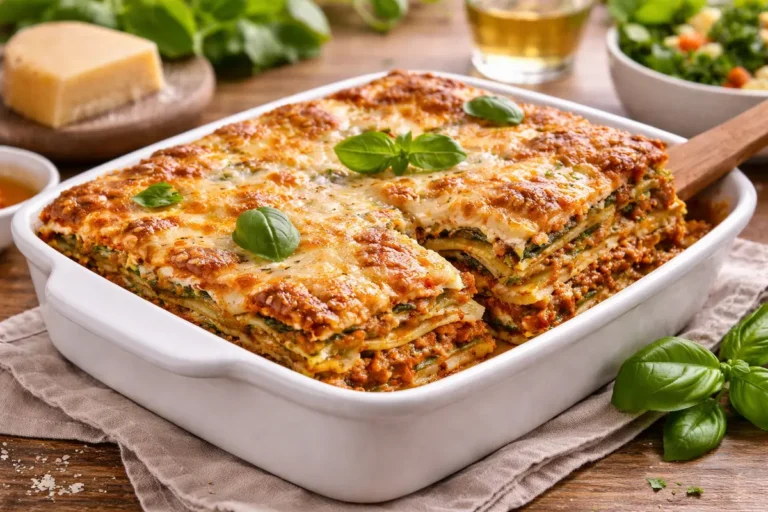
For another Bologna classic, see classic lasagne Bolognese. You can also make Bolognese ragù sauce, another essential recipe from the same regional tradition.