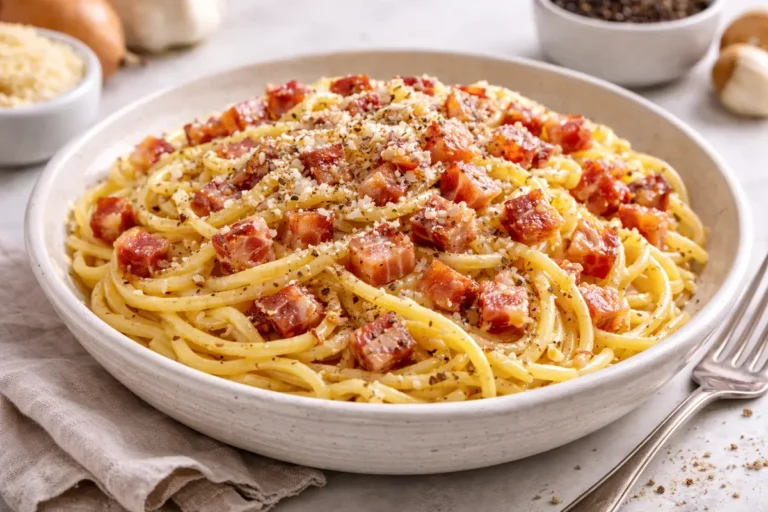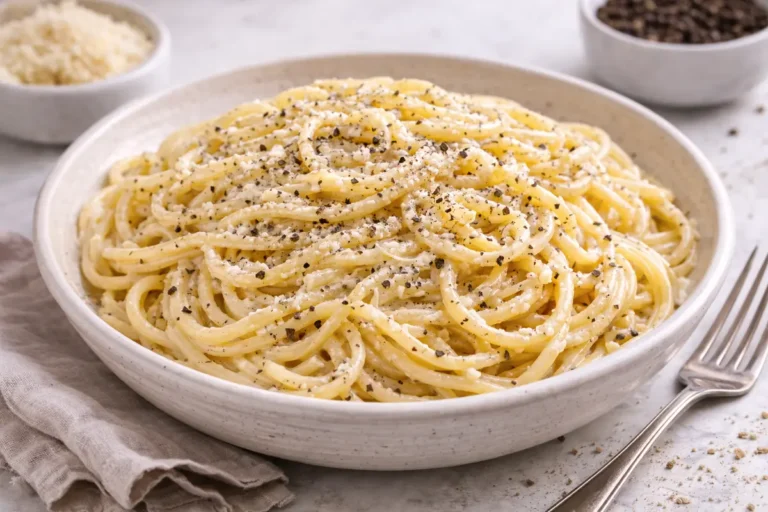
Spaghetti all’Amatriciana
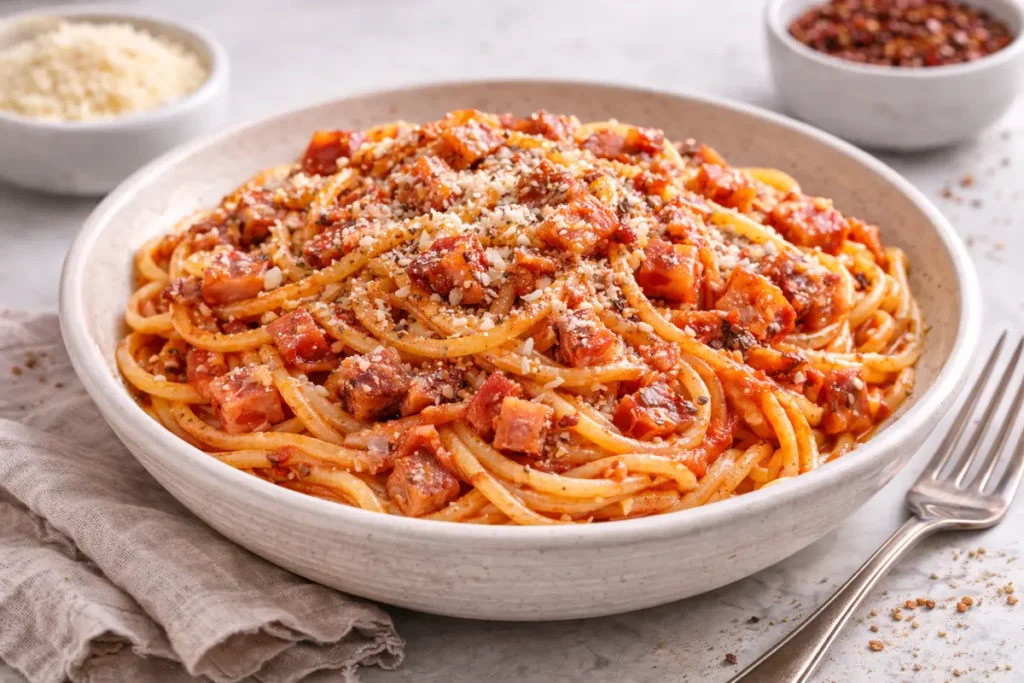
Spaghetti all’Amatriciana is a bold and flavourful Roman pasta originating from the town of Amatrice. It combines simplicity with intensity.
Ingredients (4 servings)
400 g (14 oz) spaghetti (or bucatini)
150 g (5 oz) guanciale, cut into strips (or pancetta if guanciale is unavailable)
400 g (14 oz) canned peeled San Marzano tomatoes (crushed or whole, then crushed)
50 ml (¼ cup) dry white wine (optional)
Pinch of dried chili flakes (to taste)
80 g (¾ cup) grated Pecorino Romano cheese (plus extra for serving)
Salt, to taste
Freshly ground black pepper, to taste
Optional: 1 tbsp extra-virgin olive oil (if needed)
Method
Cook the pasta: Bring a large pot of salted water to a boil. Add the spaghetti and cook until al dente according to package instructions.
Prepare guanciale: Meanwhile, heat a large skillet over medium heat. Add the guanciale strips (no oil needed if fat is sufficient). Cook until the fat renders and the meat is crisp, about 8–10 minutes.
Deglaze: Pour in the white wine (if using) and let it reduce slightly.
Add tomatoes: Add the canned tomatoes (crushing whole ones with your hands) and chili flakes. Stir to combine and simmer for about 10–12 minutes until the sauce thickens.
Season: Season with a little salt and plenty of black pepper.
Combine with pasta: Drain the pasta, reserving some cooking water. Add the pasta straight into the sauce and toss well to coat, adding a splash of pasta water if needed to loosen the sauce.
Finish with cheese: Remove from heat and stir in most of the grated Pecorino Romano, reserving some for serving.
Serve: Divide between plates and top with extra Pecorino and black pepper.
Tips and Variations
Onion and garlic are not traditionally used in amatriciana.
History of Amatricina
Amatriciana evolved from gricia, a sauce made with guanciale and cheese before tomatoes arrived in Europe. When tomatoes were introduced, the recipe transformed into what we know today.
The dish became popular in Rome and eventually spread throughout Italy, remaining closely tied to its rustic origins.