Spaghetti Cacio e Pepe
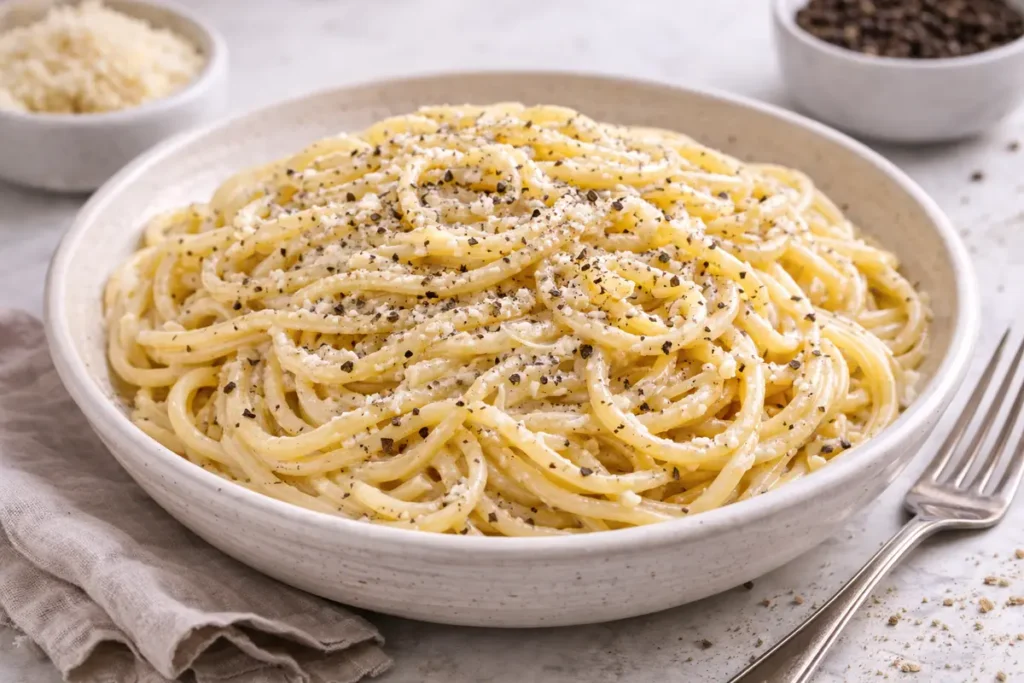
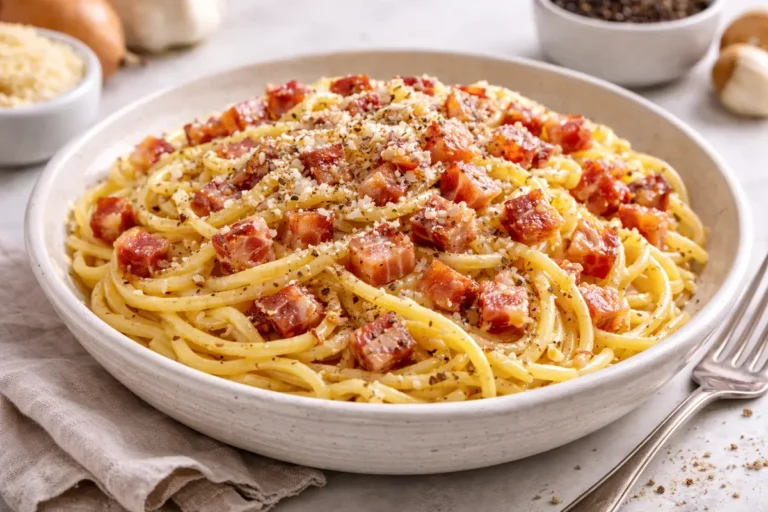
Spaghetti cacio e pepe is a cornerstone of Roman cuisine, celebrated for its simplicity and bold flavour made from just a few high-quality ingredients. This dish perfectly represents the Roman approach to cooking, where technique and balance are essential to transform pecorino cheese and black pepper into a creamy, satisfying sauce.
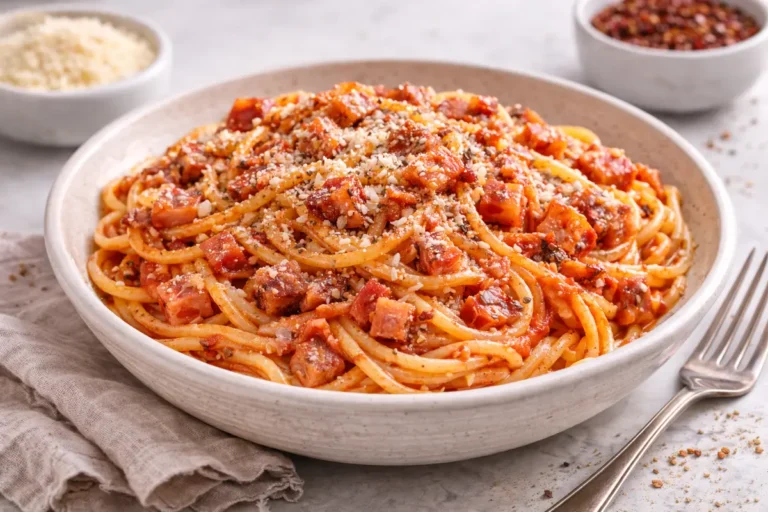
Roman food culture is built around timeless, everyday recipes that highlight local ingredients. Alongside cacio e pepe, you may also enjoy Roman-Style Braised Artichokes, a classic vegetable dish often served as a side or starter, or try another iconic pasta such as Spaghetti Amatriciana, a rich tomato-based recipe that completes the trio of Rome’s most famous pasta dishes.
Ingredients (4 servings)
400 g (14 oz) spaghetti (or tonnarelli / bucatini)
150 g (5½ oz) finely grated Pecorino Romano cheese
3 – 4 tsp freshly ground black pepper (to taste)
Salt, for the pasta water
Reserved pasta cooking water (as needed)
Method
Bring a large pot of water to a boil. Add a generous pinch of salt.
Cook the spaghetti until al dente (follow package timing).
While the pasta cooks, toast the freshly ground black pepper in a dry pan over medium heat for 30–60 seconds to release its aroma.
Reserve about 1 cup (250 ml) of pasta cooking water, then drain the spaghetti.
Add the hot pasta directly into the pan with toasted pepper. Pour in a few tablespoons of reserved pasta water and toss.
Sprinkle in the grated pecorino and continue to toss or stir vigorously, adding more pasta water as needed so the cheese melts and forms a creamy sauce that coats the pasta.
Serve immediately with extra grated pecorino and black pepper on top.
Tips and Variations
The sauce should be glossy, not clumpy , temperature control is key.
History of Cacio e Pepe
This dish originated among Roman shepherds who relied on durable ingredients that were easy to transport: dried pasta, pecorino cheese and black pepper.
Over time, cacio e pepe became a staple of Roman trattorias, celebrated for its simplicity and depth of flavour.