Spaghetti alla Carbonara
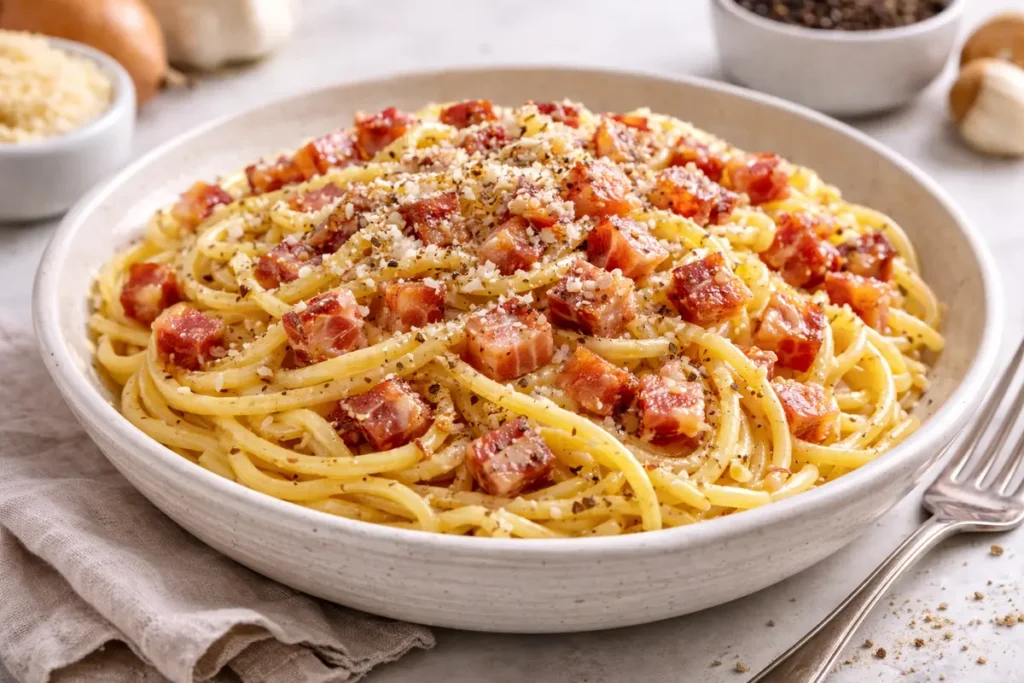
Spaghetti carbonara is one of Rome’s most famous pasta dishes, known for its rich, creamy texture achieved without the use of cream. Made with eggs, pecorino cheese, guanciale, and black pepper, this recipe perfectly represents the bold and straightforward character of Roman cooking.
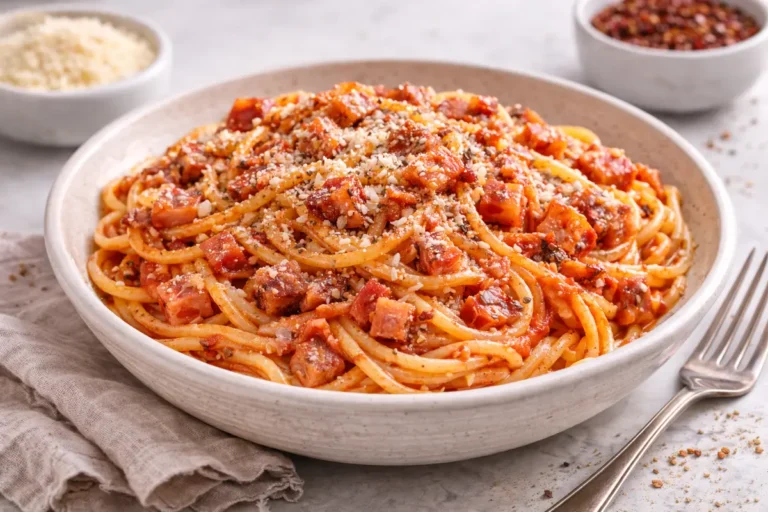
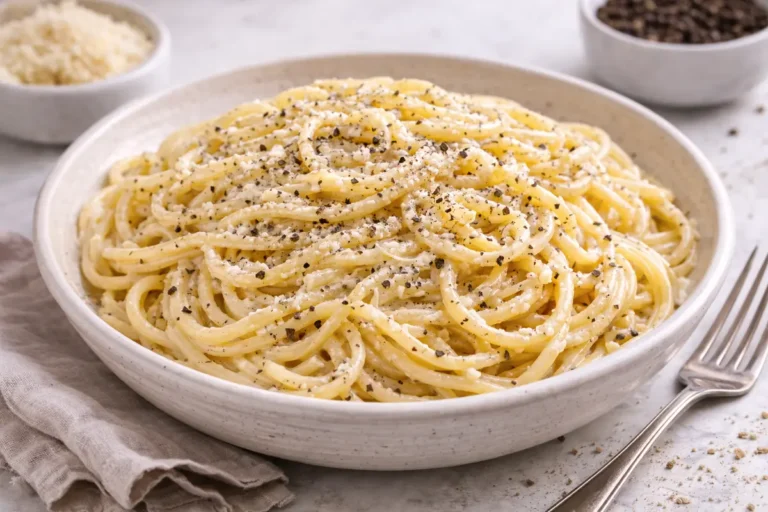
Roman cuisine is built around a small number of iconic dishes that rely on technique and high-quality ingredients. Alongside carbonara, you may also enjoy Spaghetti Cacio e Pepe, a minimalist yet deeply flavourful pasta, or Spaghetti Amatriciana, a tomato-based classic that completes the trio of Rome’s most celebrated pasta recipes.
Ingredients (4 servings)
400 g (14 oz) spaghetti (or bucatini)
200 g (7 oz) guanciale, cut into small strips (pancetta can be used if guanciale isn’t available)
4 large egg yolks + 1 whole large egg (to make the sauce rich and creamy)
100 g (3.5 oz) finely grated Pecorino Romano cheese (plus extra for serving)
Freshly ground black pepper, to taste
Salt, for the pasta water (use sparingly because the cheese and guanciale are already salty)
Method
Cook the pasta: Bring a large pot of salted water to a boil. Add the spaghetti and cook until al dente according to package instructions. Reserve about 1 cup (250 ml) of the pasta cooking water before draining.
Cook the guanciale: Heat a large skillet over medium heat. Add the guanciale and cook for 5–8 minutes until the fat renders and the meat is golden and slightly crisp. Remove the pan from the heat.
Prepare the sauce: In a bowl whisk together the egg yolks, whole egg, grated Pecorino Romano and a generous amount of freshly ground black pepper until smooth.
Combine: Add the drained spaghetti to the skillet with the guanciale fat. Toss to coat. Turn the heat off and quickly pour in the egg–cheese mixture, stirring vigorously so the hot pasta gently cooks the eggs and creates a creamy sauce (avoid direct heat to prevent the eggs from scrambling).
Adjust & serve: Add reserved pasta water a little at a time to achieve a silky, creamy sauce. Serve immediately with extra grated Pecorino Romano and more black pepper.
Tips and Variations
Cream is never used , the creaminess comes only from eggs, cheese and pasta water.
History of Ribollita
Carbonara is a relatively modern Roman dish, widely believed to have emerged in the mid-20th century. One theory links it to the carbonari, charcoal workers who needed nourishing meals made with simple ingredients.
Another theory suggests it developed after World War II, when eggs and cured pork became more available. Regardless of its origin, carbonara became a symbol of Roman cuisine, defined by precision and respect for ingredients.