Why Italian Pumpkin Pasta Takes Over the Autumn Table
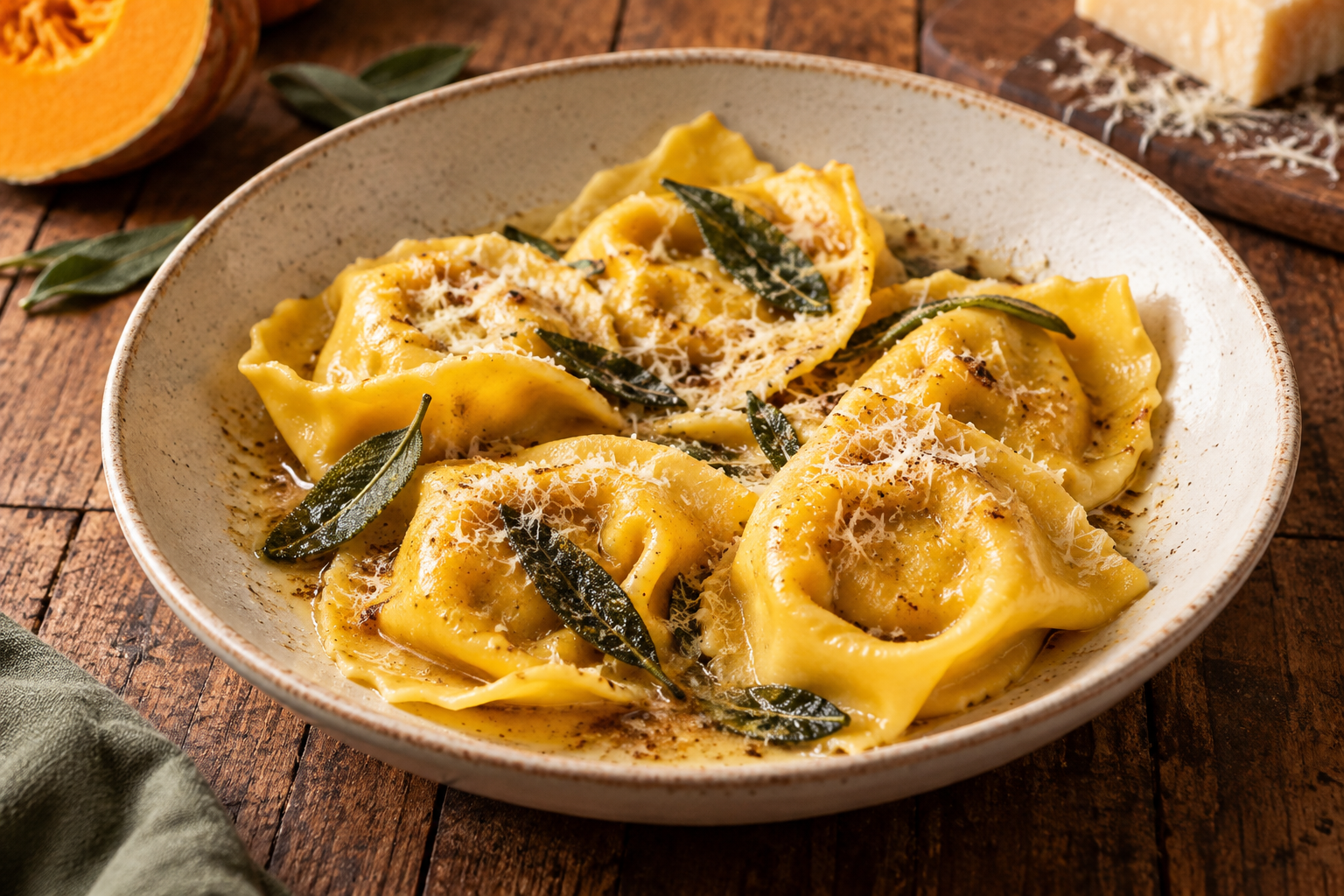
As squash reaches markets and kitchen counters, Italian pumpkin pasta returns to the autumn table. The best-known examples come from the Po Valley, where filled pasta combines sweet pumpkin with sharply savoury ingredients rather than treating it as a dessert flavour.
Mantua is closely associated with tortelli di zucca, while Ferrara has its own cappellacci di zucca. Their shapes, fillings and seasonings are not interchangeable details; they belong to different local traditions.
Why Sweet Pumpkin Needs Savoury Contrast
Pumpkin can become flat when a recipe only amplifies its sweetness. Traditional fillings create tension. Mantuan tortelli commonly bring together pumpkin, amaretti, mustard fruit and hard cheese. The result is sweet, hot, salty and aromatic.
Ferrarese cappellacci generally follow a different balance, allowing pumpkin, cheese and nutmeg to lead. The same respect for a regional filled-pasta identity can be seen in Sardinian culurgiones, even though their potato-and-pecorino filling belongs to a completely different tradition.
The Pumpkin Must Be Dry Enough
Watery pumpkin makes filled pasta difficult. Roasting usually concentrates flavour better than boiling because it drives off moisture. The cooked flesh should be cooled before the filling is mixed, then tasted before any egg or extra binder is added.
A soft filling is not automatically wrong, but it must be firm enough to portion and seal. Too much breadcrumb can make it dull, while too much cheese can hide the pumpkin.
How Italians Sauce Pumpkin-Filled Pasta
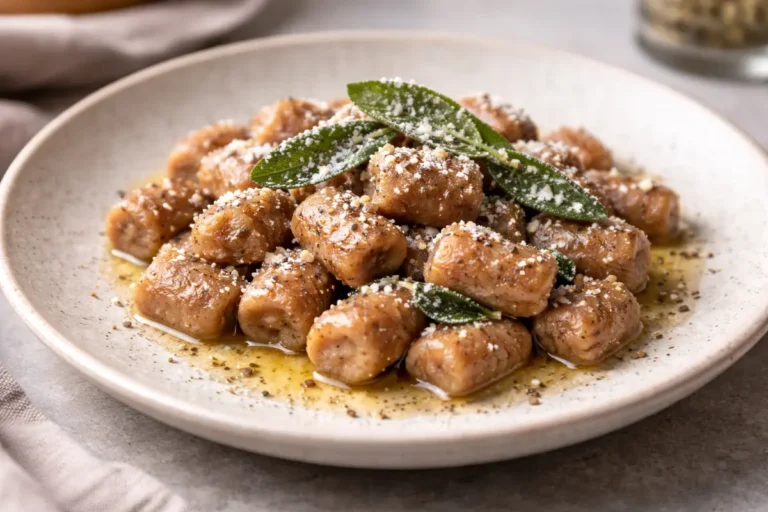
Butter and sage are popular because they coat the pasta without burying the filling. Parmigiano Reggiano or Grana Padano adds salt and depth. In some local contexts, tomato-based or meat condiments also appear, but the sauce should be understood as part of a regional version rather than a universal rule.
For another northern autumn pasta with a very different character, pizzoccheri della Valtellina replaces pumpkin sweetness with buckwheat, cabbage, potato and cheese.
Why Pumpkin Pasta Performs So Well in Autumn
The appeal is visual, seasonal and practical. Golden filling looks generous when the pasta is cut open, while the process of rolling and shaping turns a seasonal vegetable into an occasion. It also gives cooks a meaningful technique to learn instead of simply adding pumpkin purée to any sauce.
The Regional Name Is Part of the Recipe
Calling every pumpkin-filled pasta “pumpkin ravioli” makes it easier to understand at first glance, but it removes useful information. Keeping tortelli and cappellacci in the title allows readers to discover where a dish belongs and why the filling tastes the way it does.