Panettone vs Pandoro: How to Choose and Serve Them
By True Italian Table · Published 8 November 2026
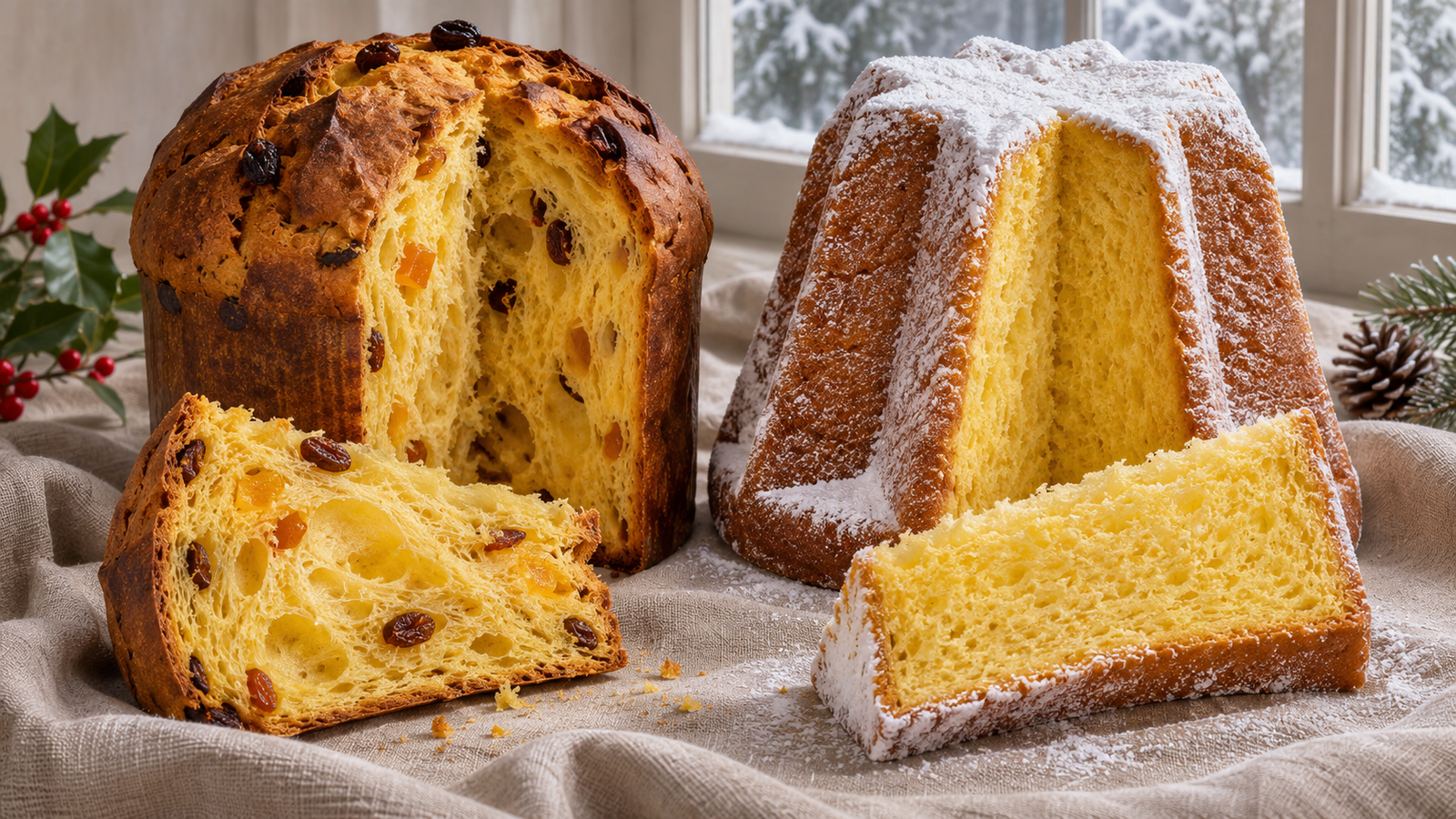
Panettone is the Italian Christmas cake usually filled with raisins and candied citrus; pandoro is the plain, golden, star-shaped cake associated with Verona. Both are rich, naturally leavened festive bakes, but their flavour and crumb give them different roles on the table. Choose classic panettone for fruit and citrus, or classic pandoro for a more uniform buttery, vanilla-scented slice.
For readers choosing a boxed Italian cake abroad, the useful question is what is inside the wrapping. Shape helps you recognise the two, but the full product description matters: chocolate, cream-filled and fruit-free variations can change the familiar comparison. Here is how to choose deliberately and serve either without turning it into an elaborate dessert.
The Main Differences at a Glance
Classic panettone is associated with Milan. It usually has a rounded top, a paper baking case and an airy crumb interrupted by raisins and pieces of candied peel. Pandoro is associated with Verona and has a tall, eight-pointed star shape, a finer golden crumb and no fruit in its classic form. Icing sugar is the familiar finish for pandoro.
These are different preparations, rather than one cake with the fruit removed. The Italian production specification describes distinct shapes and textures, while makers also sell clearly identified variations. A chocolate panettone or a filled pandoro therefore needs to be judged by its own label rather than by an assumed classic ingredient list.
- Choose classic panettone if you enjoy raisins, citrus peel and a more open, bread-like crumb.
- Choose classic pandoro if you prefer a plain buttery bake with an even texture and a sugar-dusted surface.
- Read beyond the name if you want to avoid fruit, chocolate, cream fillings or alcohol-based additions.
What the Italian Names Tell You
The regional associations are useful context, not a reason to turn a purchase into a test of loyalty. The Accademia della Crusca connects panettone with Milan and pandoro with Verona in its account of Italian Christmas breads. Their modern place on the festive table extends far beyond those cities.
Natural leavening refers to fermentation with a sourdough culture, often described on Italian packaging as lievito madre or pasta madre. It does not mean the cake will taste like a sour loaf, nor does it make an enriched cake free from wheat, butter or eggs. Judge dietary suitability from the actual ingredients and allergen declaration.
How to Choose a Boxed Cake Abroad
First decide whether you want a classic example or a flavoured variation. For a first comparison, two unfilled cakes make the distinction easiest to understand. A thick chocolate coating or cream filling can dominate the qualities you are trying to compare.
Next check the weight against how you plan to serve it. A large box can make a handsome gift, but a smaller cake may be more useful for a household that wants a few slices with coffee. Compare the product description, net weight and date rather than treating decorative packaging as a measure of quality.
For panettone, look for the fruit you actually enjoy. Producer Loison’s classic example contains sultanas and candied orange, while its range also includes recipes without candied fruit. Pandoro is a sensible starting point for a fruit-averse guest, but filled and flavoured versions still need checking. These examples explain the category; they are not a ranking of brands or a claim about current UK stock.
If you are buying for someone else, check allergens and any requirements around alcohol or fillings before choosing. A plain-looking cake is not a guarantee of a simple ingredient list. Keep the outer label with the cake if it is being given as a present.
Serving Panettone Without Hiding the Fruit
Use a serrated bread knife and a gentle sawing action to cut wedges, rather than pressing a smooth blade straight through the crumb. Remove the paper case from the portion before eating. Put the cake on a broad board or plate so the tall slice is supported as you cut.
Begin with a plain slice. Coffee or tea alongside is enough to let the fruit and citrus come through. Cream can be offered separately, allowing each person to decide how rich they want the serving. There is no need to soak a good slice in sauce before anyone has tasted it.
Loison also gives gentle warming as one way to serve its panettone. Follow the instructions for the particular cake, especially when fillings or coatings are involved. Warming should bring out aroma rather than toast the outside and dry the centre. Do not assume every decorative wrapper or container is suitable for heating.
Serving Pandoro and Using the Icing Sugar
For a straightforward serving, cut vertical wedges that retain the star-shaped edge. Alternatively, horizontal slices reveal the full star outline and can be shared in smaller pieces. Neither needs to be stacked into a showpiece to make the cake feel festive.
Add icing sugar close to serving and follow the pack’s instructions if it comes with a separate sachet. Dust only the portion you intend to put on the table if you prefer to keep the rest plain. Serve with tea or coffee, or offer a little cream or fruit on the side as your own accompaniment rather than describing it as a compulsory Italian custom.
Keeping the Rest for Another Day
Reclose the original inner bag promptly and follow the maker’s storage and after-opening advice. Shelf life differs between cakes, particularly when they contain fillings. A date printed for an unopened cake does not answer every question about how long a cut cake should be kept.
For a plain leftover slice that has simply become less soft, gentle toasting is an optional way to change the texture. Treat it as a new serving idea, not a way to rescue mouldy or spoiled food. If you want another Italian sweet with a deliberately crisp texture, explore cantucci, the Tuscan almond biscuits.
Which One Should You Buy?
If dried fruit is the deciding issue, choose a classic pandoro or a panettone whose label explicitly identifies a fruit-free variation. If you enjoy candied citrus and raisins, classic panettone is the more direct choice. If you are sharing with mixed preferences, small portions of each are more informative than a supposed national winner.
Neither name tells you which particular cake will be your favourite. Start with the texture and flavours you want, check what is actually in the box and serve it simply enough to notice the difference.
Explore More Italian Food
Cantucci: Tuscan Almond Biscuits · More Italian Food Trends
Sources and Further Reading
- Accademia della Crusca: Pani di Natale — checked 8 November 2026
- Italian production specification, decree of 22 July 2005 — checked 8 November 2026
- Melegatti: Il Pandoro Originale — checked 8 November 2026
- Loison: classic panettone product data — checked 8 November 2026
- Loison: products with and without candied fruit — checked 8 November 2026
- Loison: cutting and serving panettone — checked 8 November 2026