Pitta 'Mpigliata: Calabrian Fruit and Nut Pastry
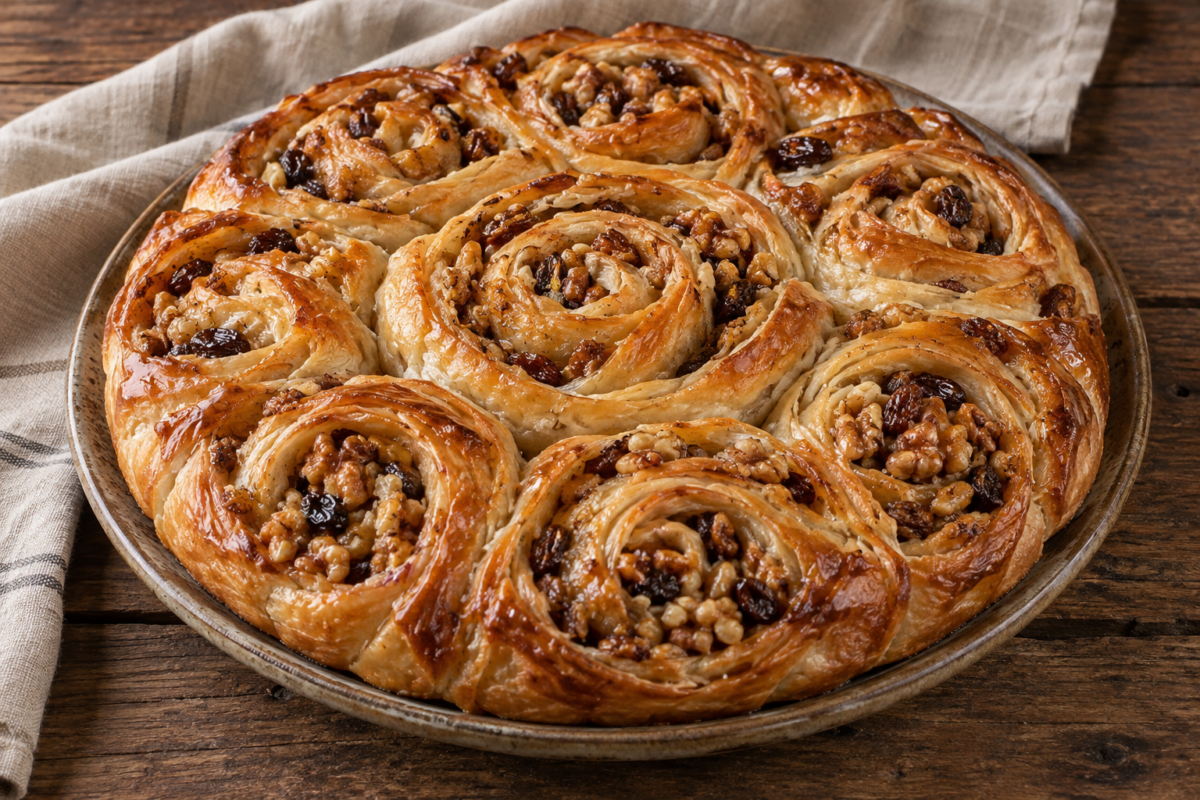
Pitta ‘mpigliata is a celebratory Calabrian pastry made from thin strips of dough wrapped around a fragrant walnut and raisin filling. The individual coils are arranged together, creating a cake that opens into crisp, sticky layers.
Honey, citrus and spice give the filling depth, but the pastry should not become heavy or soaked. A light glaze after baking is enough.
Recipe at a Glance
- Region: Calabria
- Category: Dessert
- Yield: 10 servings
- Total time: approximately 2 hours 30 minutes
This version keeps the recognisable regional character of the dish while giving practical cues for a UK home kitchen. The quantities, sequence and finishing texture matter more than decorative additions, so prepare the core ingredients carefully before considering optional variations.
Where Italian ingredients differ in strength, moisture or saltiness, taste and adjust conservatively. Any accessible substitute is identified as a substitute rather than presented as the traditional ingredient, keeping the distinction clear for readers.
What Is Pitta ‘mpigliata?
Pitta ’mpigliata is a Calabrian festive pastry made from thin dough wrapped or coiled around a filling of nuts, dried fruit, honey and warm spices. Its sculptural form is part of its identity, whether shaped as roses, coils or a larger spiral.
The filling should be fragrant and cohesive rather than wet. As it bakes, honey and fruit bind the nuts while the exposed pastry edges become crisp.
A Festive Pastry from Calabria
The pastry is closely associated with San Giovanni in Fiore and is often prepared for Christmas and weddings. Families shape it in different ways, from a single spiral to a group of rose-like coils.
The filling must be chopped finely enough to roll without tearing the dough. Letting it stand briefly also helps the raisins soften and the flavours mingle.
Ingredients and Why They Matter
Walnuts, raisins, honey and citrus are common foundations, with cinnamon or cloves used carefully. Chop the nuts evenly so the pastry can be rolled without tearing, and drain soaked dried fruit thoroughly.
The dough needs enough elasticity to roll thinly but should not be soft or sticky. Resting relaxes it and makes shaping cleaner. Olive oil or wine may appear in traditional-style doughs according to the family recipe.
- 400 g plain flour
- 2 eggs
- 80 ml olive oil
- 80 ml dry white wine
- 250 g walnuts, finely chopped
- 120 g raisins
- 100 g honey
- Zest of 1 orange
- 1 tsp cinnamon
- A pinch of ground cloves
- A pinch of salt
Before You Start
This recipe makes 10 servings. Allow approximately 45 minutes for preparation and 45 minutes for cooking, plus 1 hour additional resting time. Read through the complete method first and prepare every ingredient before the main cooking begins.
Times are a practical guide rather than a substitute for sight, aroma and texture. Pan size, ingredient temperature and individual ovens can change the pace, so use the sensory cues in the method and tips to decide when each stage is ready.
Keep a clean plate, the necessary draining tools and any finishing ingredients ready before cooking. This prevents the final stage from waiting while a hot sauce, fried coating, delicate dough or freshly cooked pasta loses its intended texture.
How to Make Pitta ‘mpigliata
- Prepare the filling.
Mix walnuts, raisins, honey, orange zest and spices, then leave for thirty minutes. - Make the dough.
Knead flour, eggs, oil, wine and salt into a smooth elastic dough. Rest covered. - Roll thinly.
Divide the dough and roll into long thin strips. - Fill and coil.
Spread filling along each strip, fold lightly and roll into loose rosettes. Arrange them together in an oiled tin. - Bake and glaze.
Bake at 175°C until golden and crisp, then brush sparingly with warm honey.
Expert Cooking Tips
- Chop the nuts finely.
Large pieces can split the dough. - Do not overfill.
The coils need space to open in the oven. - Cool before cutting.
The honey and filling set as they cool.
Spread a thin, even filling and leave a clear edge for sealing. Roll without trapping large air pockets, then cut or coil according to the chosen shape. Support delicate sections as they are transferred to the tin.
Bake until the pastry is well coloured and the filling bubbles lightly. Cool before moving or slicing because hot honey makes the structure fragile.
Common Mistakes to Avoid
The most common problems come from rushing the main technique or correcting seasoning too early. Keep the heat appropriate to the method, allow ingredients to reach the texture described above and taste again near the end, especially when cheese, cured meat, seafood or reduced broth contributes salt.
Measure the principal ingredients accurately on the first attempt. Once you understand the intended consistency, small adjustments are easier to make without changing the identity of the dish.
Authentic Variations and Substitutions
Pitta ’mpigliata has many family forms and filling ratios, particularly around the province of Cosenza. Present the selected shape as a workable version and avoid suggesting that other established shapes are incorrect.
How to Serve Pitta ‘mpigliata
Cut into small portions and serve with coffee or dessert wine.
Serve in small slices or individual pieces with coffee. The pastry is rich in nuts and dried fruit, so it needs no cream or additional sweet sauce.
Storage and Reheating
Once completely cool, keep airtight in a cool place for several days. The flavour becomes more integrated after a rest. Refrigeration is unnecessary unless the room is very warm.
Frequently Asked Questions
What texture should Pitta ‘mpigliata have?
Bake until the pastry is well coloured and the filling bubbles lightly. Cool before moving or slicing because hot honey makes the structure fragile.
Can Pitta ‘mpigliata be made ahead?
Once completely cool, keep airtight in a cool place for several days. The flavour becomes more integrated after a rest. Refrigeration is unnecessary unless the room is very warm.
What substitutions are possible in Pitta ‘mpigliata?
Pitta ’mpigliata has many family forms and filling ratios, particularly around the province of Cosenza. Present the selected shape as a workable version and avoid suggesting that other established shapes are incorrect.
More Calabrian Recipes
Continue exploring regional Italian cooking with Ricotta Meatballs in Tomato Sauce and Stuffed Aubergines.