World Pasta Day 2026 Comes to Parma
World Pasta Day 2026 places Parma at the centre of the international pasta conversation. The annual celebration falls on 25 October, while this year’s industry gathering in Parma continues with events at Fiere di Parma alongside Cibus Tec.
Parma is an appropriate host. The city sits within a food landscape associated with pasta, Parmigiano Reggiano, Prosciutto di Parma and an extensive network of producers and food technology businesses. Yet the most interesting way to mark the day at home is not to declare one “best” pasta. It is to understand how shapes, flour, eggs and sauces change from region to region.
Why World Pasta Day Is Held on 25 October
The date traces back to the World Pasta Congress held in Rome on 25 October 1995. Pasta makers agreed that a food with such broad cultural and practical importance deserved an annual international occasion. World Pasta Day has been observed since 1998.
The event now brings together producers, associations, institutions, retailers, technology specialists and food media. That makes it part celebration and part discussion about how pasta is produced, sold and cooked.
Parma Is More Than a Backdrop
Emilia-Romagna is central to Italy’s fresh egg pasta tradition. Around the region, cooks shape filled and cut pasta with small changes in dough, size and filling that carry local identity. Parma’s food reputation also helps the event speak to an international audience without separating pasta from the ingredients and skills around it.
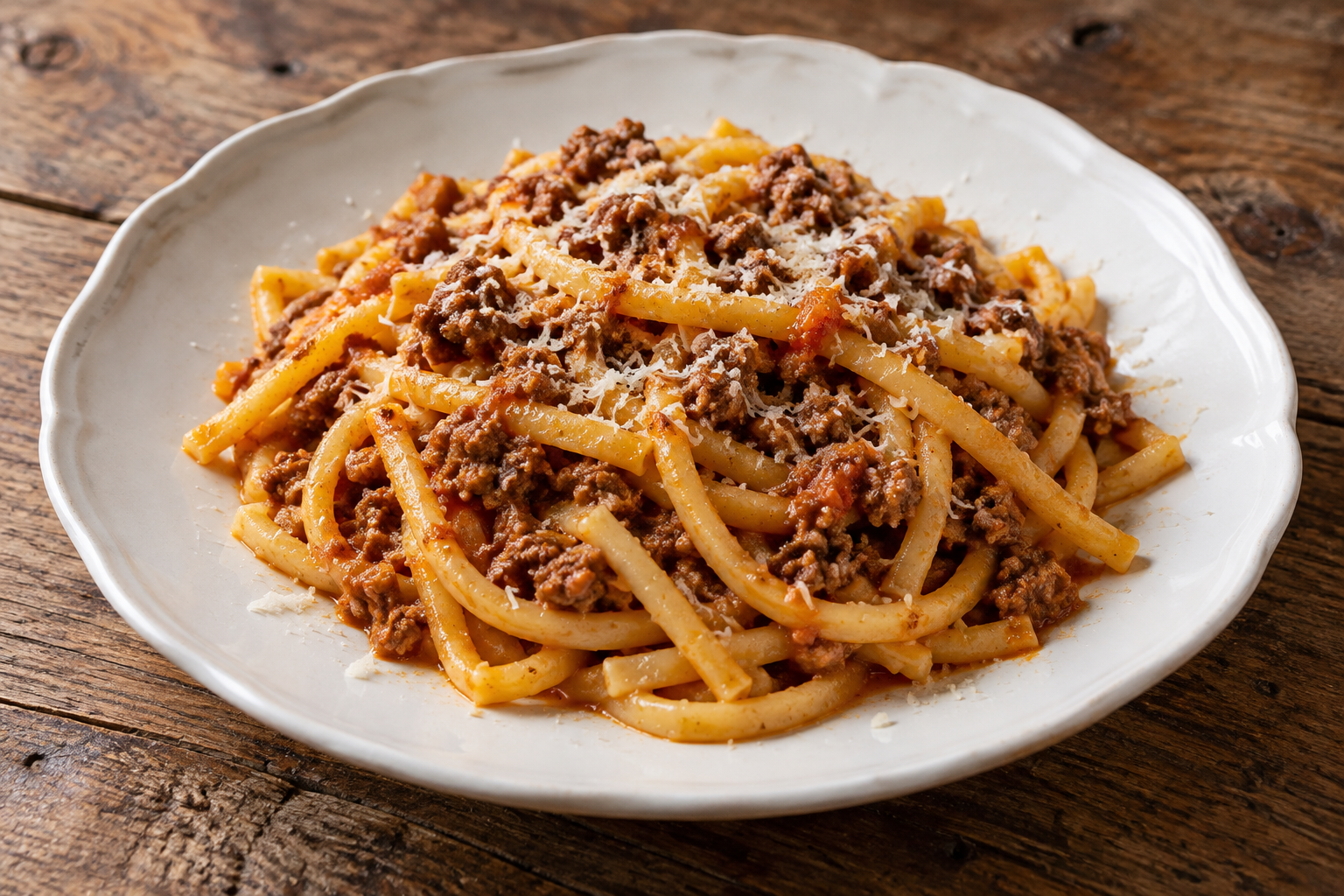
Our passatelli in brodo guide explores a different use of eggs, cheese and breadcrumbs in Emilia-Romagna, while maccheroni alla chitarra shows how Abruzzo creates a completely different pasta texture with its stringed cutting tool.
A Better Way to Celebrate Pasta at Home
Choose a shape for its sauce rather than for novelty. Long strands suit sauces that cling; ridged tubes can hold thicker condiments; filled pasta needs a dressing that respects the filling. Save some cooking water, finish the pasta in the sauce and stop before the texture turns soft.
It is also worth looking beyond the most familiar shapes. Busiate, fileja, bigoli, tajarin, lagane and culurgiones each tell a regional story. Learning why one exists is more rewarding than treating unusual pasta as a social-media prop.
What World Pasta Day Can Usefully Highlight
Pasta is both industrial and handmade, everyday and ceremonial, local and global. The 2026 event in Parma reflects that breadth. For readers, the strongest takeaway is simple: there is always another regional technique to learn, and the sauce should never be separated from the shape chosen to carry it.