Italian All Saints’ Day Sweets: The Biscuits Made for Early November
As October ends, Italian bakeries begin to display sweets associated with 1 November, All Saints’ Day, and 2 November, All Souls’ Day. There is no single national recipe. Instead, names such as fave dei morti, ossa dei morti, pane dei morti and pupi di zucchero lead to different biscuits and confections across the country.
The imagery can sound sombre in English, but the food belongs to a wider culture of remembrance, family visits and seasonal sharing. The recipes often use nuts, spices, dried fruit, cocoa or firm biscuit doughs that suit the colder part of the year.
What Are Fave dei Morti?
The name means “beans of the dead”. Depending on the region and recipe, these are small almond biscuits with a crisp, soft or chewy texture. The bean shape carries symbolic associations that long predate the modern biscuit.
Recipes vary, so it is unhelpful to present one formula as the authentic national version. Almonds, sugar and egg are common, while flavourings and texture change by place.
Ossa dei Morti Are Not One Biscuit Either
“Bones of the dead” describes several regional sweets. Some are very hard, pale biscuits designed for dipping; Sicilian versions may have a crisp white upper layer and a darker caramelised base. Other regions use different nuts, spices or shapes under the same broad name.
This is a useful reminder that Italian food names can travel while recipes remain local. The title alone does not prove that two biscuits are the same.
Nuts Connect Many Early-November Sweets
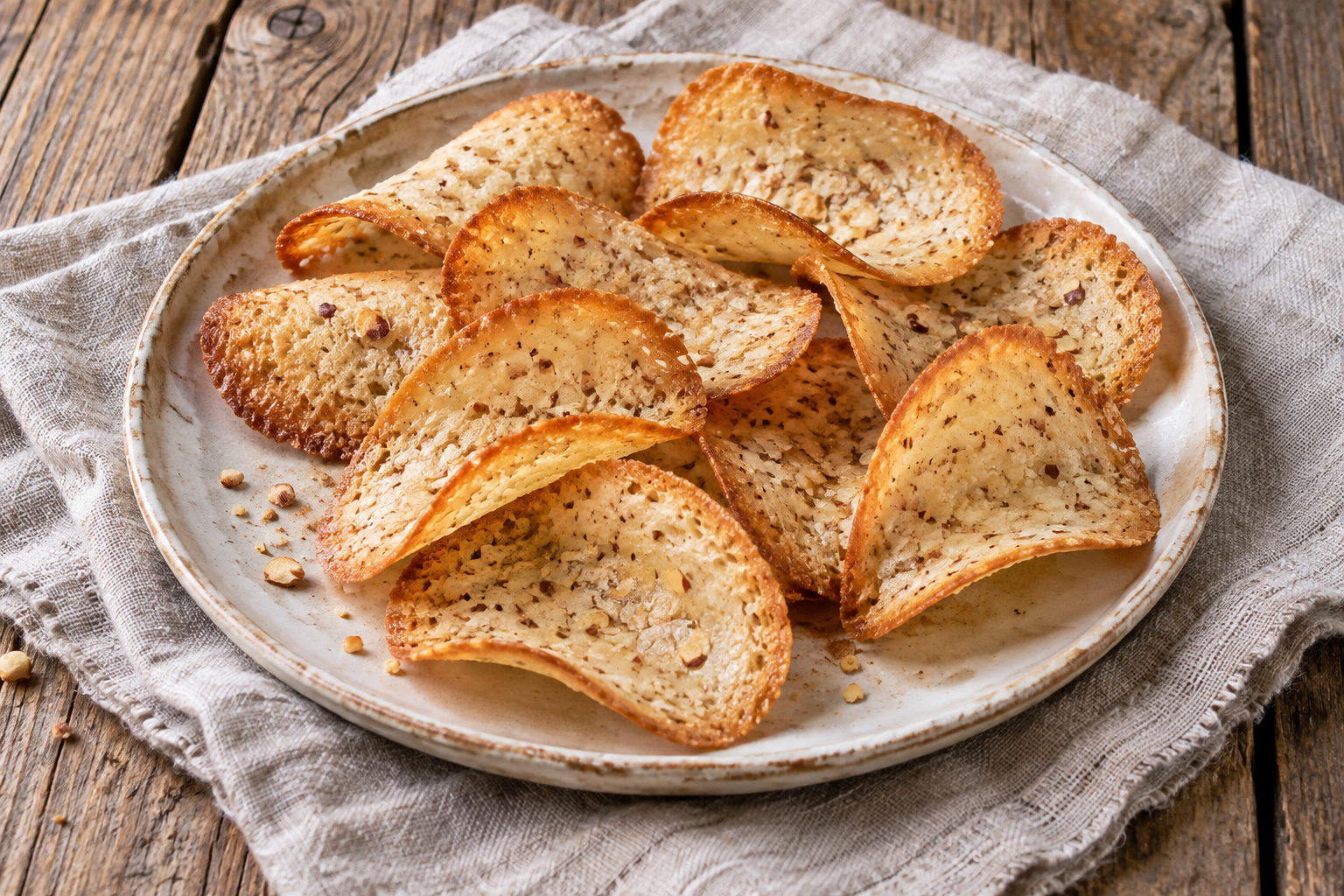
Almonds, hazelnuts and walnuts appear repeatedly because they store well after harvest and bring richness without elaborate decoration. Our tegole valdostane are not All Saints’ biscuits, but they show how northern Italian baking turns nuts into thin, crisp sweets. Pitta ’mpigliata offers a southern expression of autumn nuts and dried fruit.
How to Write About These Traditions Respectfully
Food articles often reduce commemorative sweets to “spooky Italian biscuits”. That makes them easy to place beside Halloween content but removes their actual context. Halloween is now visible in Italy, especially for children and commercial events, yet the sweets around 1 and 2 November have their own histories.
A better approach is to identify the region, give the local name and explain whether the sweet is connected to All Saints, All Souls or a wider autumn custom. Where evidence is uncertain, it is better to say so than to invent an ancient origin.
Why These Biscuits Are Returning to Attention
They fit several current interests at once: regional baking, small-format sweets, almonds and hazelnuts, and food tied to a precise calendar moment. More importantly, they show how Italian recipes can carry memory without needing to become museum pieces.